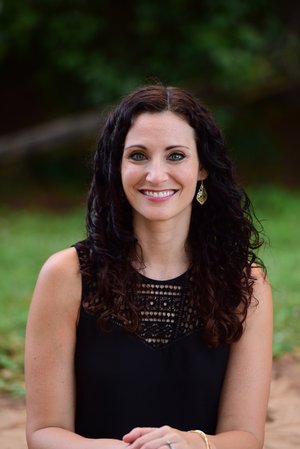
Alejandra Dubcovsky
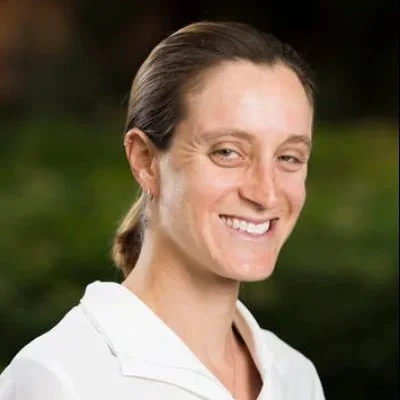
Alejandra Dubcovsky is a professor of history at the University of California, Riverside. A native of Argentina, she fell in love with early U.S. history and received her BA and PhD from UC Berkeley. She also holds a Masters in Library and Information Science from San Jose State. Her first book, Informed Power, Communication in the Early American South (HUP 2016) is a study of the struggle among the multi-ethnic and multi-lingual peoples in the expansive American South to acquire and control information. If knowledge is power, she explores not only what individuals did with this power, but also how they gained their knowledge.
Her second book, Talking Back: Native Women and the Making of the Early South (YUP 2023), centers the experiences and voices of previously unknown and understudied women. This book is framed by a simple assumption: women had power in shaping the world they inhabited. It argues that Native women were the ones who kept the region fed, improved the lands surrounding the towns, defined territoriality and safety, and shaped the fight against colonial intrusions.
Her works have been featured in several journals, including Ethnohistory, Journal of Southern History, and the William and Mary Quarterly. She has served in the editorial boards of the journals of Ethnohistory (2015-2018), NAISA (2017-2025), Native South (2016-), American Historical Review (2022-2025), and the Journal of American History (2024-)
She is currently working on two collaborative language recovery and reclamation projects. The first is Ticha, an international effort to document and promote Zapotec languages and knowledge through online resources provided to the public at no cost. Our team includes Zapotec and non-Zapotec linguists, historians, librarians and community members. The second is Hebuano, which focuses on analyzing and translating 17th century materials in the Timucua language of Florida. The project also features a public-facing website (https://hebuano.com/) created for and with the help of Timucua descendants and in consultation with ancestrally connected Native nations as well as a team of linguists and interested scholars.