Brian DeLay
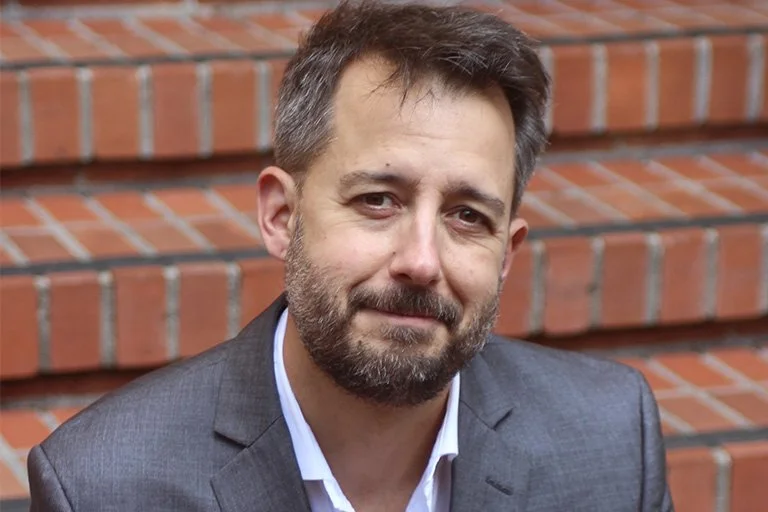
Brian DeLay is a scholar of 18th- and 19th-century North America, specializing in transnational, borderlands, and Native American histories. Most of his writing explores connections between U.S., Latin American, and Indigenous histories in order to better understand power and inequality in the Western Hemisphere.
His first book, War of a Thousand Deserts: Indian Raids and the U.S.-Mexican War(link is external) (Yale University Press), recovers the forgotten, transnational story of how Comanches, Kiowas, Apaches, Navajos and other Indigenous peoples shaped the transformative era of the U.S.-Mexican War. War of a Thousand Deserts won best book prizes from the Latin American Studies Association, the Western History Association, and the Society for Historians of the Early American Republic, and was a finalist for the Francis Parkman Prize. He is the editor of North American Borderlands(link is external) (Routledge), and co-author of the U.S. history textbooks Experience History(link is external) and U.S./A Narrative History(link is external)’ (McGraw-Hill).
He has published articles, book chapters, and essays on variety of subjects. He has argued that historians of foreign relations should center Indigenous polities in histories of international relations and empire(link is external) in 19th-century North America, and that, for most of the century, relations between Native nations dominated the continent’s international system(link is external). Other topics he has explored in my writing include the transnational context of John Singleton Copley’s famous painting Watson and the Shark; discourses of belonging and patterns of conflict between Navajos and New Mexicans; similarities in the violence(link is external) of borderland Mexico’s 21st-century drug war and the borderland violence of the 19th-century; the reaction of the United States to the French intervention in Mexico; white supremacy and the Second Amendment(link is external); the dependence of the arms industr(link is external)y on the U.S. government and its taxpayers; and the myths of continuity(link is external) that gun-rights proponents deploy to attack firearms regulations in the Bruen era.
He is now working on three interconnected projects about the history of the international arms trade. The first is a book called Aim at Empire: An American Revolution through the Barrel of a Gun. The book recasts the era of the North American Revolution (1763-1795) as a forty-year struggle between imperialists, republican insurgents, enslaved people, and Indigenous polities over the power conveyed by guns and ammunition. My 2023 American Historical Review article "The Arms Trade & American Revolutions" (link is external) previews some of the book's main arguments. Aim at Empire will be published in 2027 by W.W. Norton. The second project is another book under contract with W.W. Norton: Means of Destruction: Guns, Freedom, & Domination in the Americas before World War II. Advance material from Means of Destruction has appeared here(link is external), here(link is external), and here(link is external). His work on both books has been funded by fellowships from the John Simon Guggenheim Foundation, the Stanford Humanities Center, the Harvard Radcliffe Institute for Advanced Studies, the Harry Frank Guggenheim Foundation, and the American Council of Learned Societies.
The third project-in-progress is a data project. For the past several years he has been working with a team of student researchers to quantify the global arms trade from the end of the Napoleonic Wars to the outbreak of World War I. The vast majority of firearms sold and used around the world in the long nineteenth-century originated with five major producers/exporters: Britain, France, Belgium, the United States, and Germany. The Project on Arms Trade History reconstructs the contours of the global arms trade in this era by extracting data from annual customs reports produced by these countries, counting everything from cannons to percussion caps. Once complete, PATH will be made publicly available as a website enabling scholars anywhere in the world to track the global movement of guns, ammunition, and artillery between 1814-1914 at multiple scales.
The United States has a tradition of regulating firearms in the name of public safety, one that stretches back to the early colonial era. Drawing on my understanding of that tradition, he has worked as an expert witness and drafted declarations on the history of gun technology and regulation for state and local authorities defending gun-safety laws against Second Amendment challenges in Washington D.C., Oregon, Illinois, Washington State, California, New Jersey, Delaware, Colorado, Nevada, and Massachusetts.
Since 2014, he has served alongside historians Steven Hahn and Amy Dru Stanley as series editor for the University of Pennsylvania Press book series America in the Nineteenth Century(link is external).
At Berkeley, he teaches classes on U.S., Latin American, and Native American history. He has had the privilege of advising wonderful Ph.D. students working on topics that span the continent and range from the early colonial period through the twentieth century. I’m particularly interested in advising students who are interested in the Age of Revolutions, borderlands, Native American, and/or transnational history; who are more curious than judgmental about the past; and who care about writing. With Mark Brilliant, Hidetaka Hirota, Bernadette Pérez, and Dmitri Brown he co-directs Berkeley West, a dissertation group for Berkeley Ph.D. students working on the history of the North American West, (very) broadly conceived.