
Episode Summary
“We’re still here.” Historian Michael Oberg joins Jason Herbert to explore the history of the Onondaga Nation, keepers of the central fire of the Haudenosaunee Confederacy, also known as the Iroquois Six Nations.
Drawing on his book The Central Fire of the Iroquois, Oberg traces a community’s enduring commitment to its homeland, sovereignty, and traditions despite centuries of invasion, dispossession, and efforts to erase its identity. We discuss the Peacemaker and Hiawatha, the Great Law of Peace, and how ceremony, diplomacy, and listening have sustained the Onondaga people.
What changes when we place Onondaga alongside Boston and Philadelphia at the center of early American history? How did New York acquire Indigenous lands—and why does Oberg challenge the claim that the Haudenosaunee were conquered during the American Revolution? And what does the Two Row Wampum teach us about sharing space without surrendering independence?
The conversation also connects boarding schools and removal policies to the struggle to restore Onondaga Lake and Creek. Along the way, we consider historians’ responsibilities to living communities and why Indigenous sovereignty and environmental restoration matter to everyone who shares these lands.
Follow Reckoning with Jason Herbert for more conversations about Indigenous history, American history, and the stories that shape our world.
About Michael Oberg
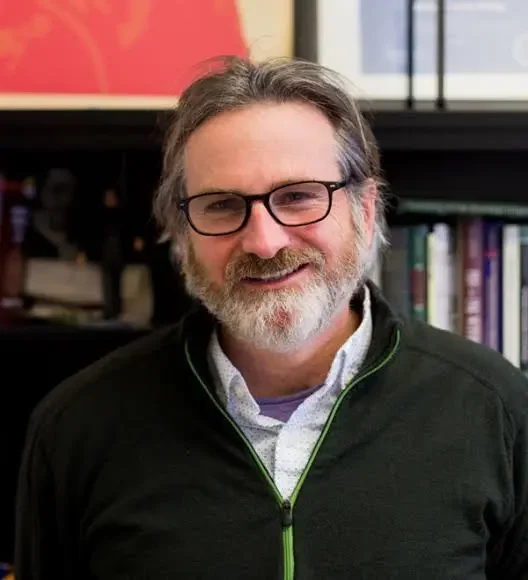
Michael Leroy Oberg, the author of Native America, is Distinguished Professor of History at SUNY-Geneseo and founder of the Geneseo Center for Local and Municipal History, which he directed from 2019 until 2022. In addition to this textbook, now in its third edition, he has written the following works: Dominion and Civility: English Imperialism and Native America, 1585-1685 (Ithaca: Cornell University Press, 1999); Uncas: First of the Mohegans, (Ithaca: Cornell University Press, 2003); Samuel Wiseman’s Book of Record: The Official Account of Bacon’s Rebellion in Virginia, (Lanham: Lexington Books, 2005); The Head in Edward Nugent’s Hand: Roanoke’s Forgotten Indians, (Philadelphia: University of Pennsylvania Press, 2007); the first edition of Native America; Professional Indian: Eleazer Williams’s American Odyssey, (Philadelphia: University of Pennsylvania Press, 2015); and Peacemakers: The Iroquois, the United States, and the Treaty of Canandaigua, 1794, (New York: Oxford University Press, 2015). He has published, as well, articles and reviews, and has worked as a historical consultant for native communities in New York and North Carolina, as well as for the Indian Resources Section of the United States Department of Justice. His most recent book, The Central Fire: The Rise, Fall, and Rise Again of the Onondaga Nation, was recently published by Yale University Press. He has won awards for his teaching and research in Montana and in New York, including the SUNY Chancellor’s Award for Excellence in Teaching.
A native of Ventura, California, Professor Oberg earned his Bachelor’s and Master’s degrees from the California State University at Long Beach. He took his Ph.D in 1994 from Syracuse University. From 1994 until 1998, Professor Oberg taught at Montana State University at Billings, before moving back to upstate New York in 1998. With the exception of one year spent teaching at the University of Houston, he has been at SUNY-Geneseo ever since. He lives in Rochester, New York.
Professor Oberg teaches classes at Geneseo in the College’s freshman writing program and, for the Department of History, courses in Native American History, American Indian Law and Public Policy, and on the history of the Iroquois. You can contact him by email at oberg@geneseo.edu. For current events and developments in Native American history relevant to materials covered in Native America, please follow @michaelleroyoberg.bsky.social on Blue Sky.
Dr. Oberg is at work on two book projects. The first, to be published by Oxford University Press, is a history of the American military invasion of the Haudenosaunee homelands during the Revolution. The second is a history of the Skyhorse-Mohawk trial in Southern California, in which two activists linked to the American Indian Movement faced first degree murder charges for the killing of a cab driver in Ventura County in 1974.